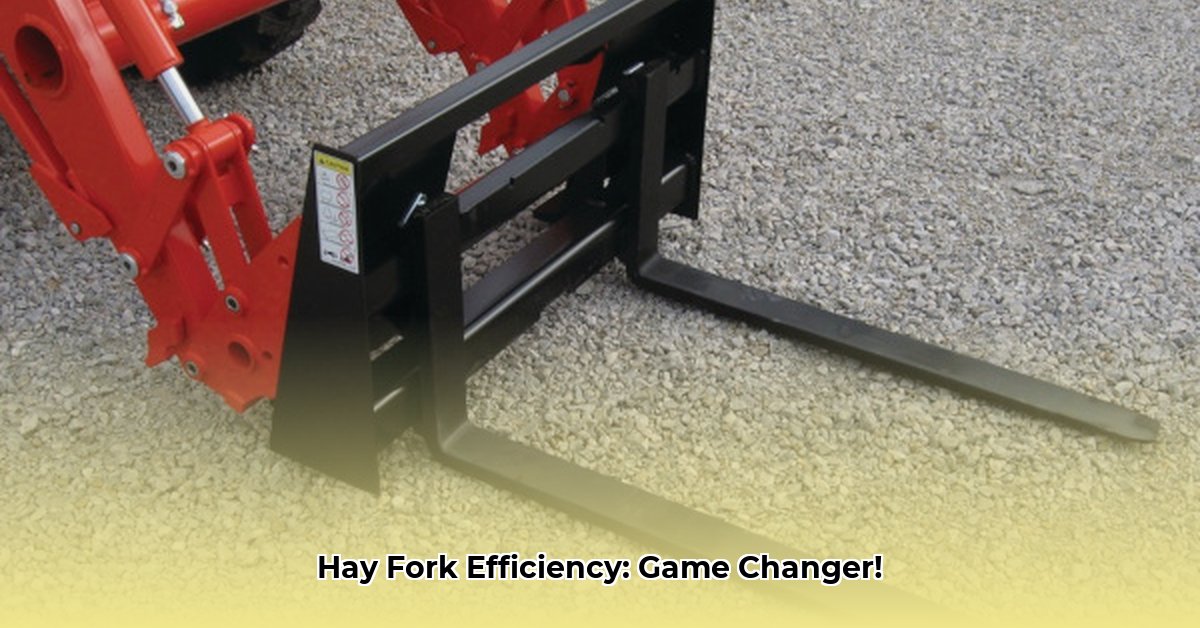
Hay Fork Tractor Supply: Your Guide to Efficient Hay Handling
Finding the right hay fork can significantly impact your farm's productivity and profitability. This guide helps you select the perfect hay fork from Tractor Supply, maximizing efficiency and minimizing costs. We'll cover different types, safe operation, maintenance, and even the long-term return on investment (ROI). For more information on Tractor Supply's hay fork selection, visit Tractor Supply Forks.
Choosing the Right Hay Fork: Matching Your Needs to Tractor Supply's Selection
Selecting the ideal hay fork isn't simply choosing the first one you see; it's about aligning your specific farming operation with the right tool. Consider these crucial factors:
Farm Size: A small hobby farm's needs differ greatly from a large-scale operation's. A smaller farm might suffice with a lighter-duty square bale fork, while a larger operation probably needs a heavy-duty round bale fork or even a versatile grapple fork.
Bale Type: This is paramount! Round bale forks are designed exclusively for round bales, using curved tines to secure the bale. Conversely, square bale forks utilize straight tines for square bales. Grapple forks offer versatility, handling both but sometimes requiring more skillful operation.
Tractor Capacity: Before purchasing, consult your tractor's owner's manual to verify its lifting capacity. Selecting a fork exceeding this limit risks serious damage to your tractor and potentially injuries. Remember, safety first!
Fork Weight Capacity: Choose a fork capable of comfortably handling your heaviest bales. An undersized fork risks damage and creates inefficiency; an oversized one might be unwieldy and difficult to manage.
Here's a comparison table (note: specific weight capacities vary by model; check Tractor Supply's website or consult a sales associate for precise specifications):
| Hay Fork Type | Ideal Bale Type | Typical Weight Capacity Range (lbs) | Pros | Cons |
|---|---|---|---|---|
| Round Bale Fork | Round Bales | 1500 - 3000+ | Efficient, designed for round bales | Not suitable for square bales; less versatile |
| Square Bale Fork | Square Bales | 1000 - 2500+ | Efficient, designed for square bales | Not suitable for round bales; less versatile |
| Grapple Fork | Round & Square Bales | Varies greatly by model | Versatile, handles both bale types | Can be more complex to operate; potentially more expensive |
Safely Operating Your New Tractor Supply Hay Fork
Prioritizing safety is crucial when using heavy equipment. Here's a step-by-step guide for safe and efficient operation:
Secure Attachment: Double-check the hay fork's secure attachment to your tractor's three-point hitch. Ensure all pins are firmly in place and connections are tight. A loose connection could lead to detachment, resulting in a serious accident.
Even Weight Distribution: Before lifting, ensure even weight distribution across the fork. Off-center loading can cause instability, potentially leading to a tip-over or bale damage.
Controlled Movements: Operate the hay fork slowly and deliberately, particularly during loading and unloading. Sudden movements can be unstable and damaging.
Safe Transport: Transport loaded forks slowly and carefully, observing your surroundings and avoiding obstacles.
Proper Storage: Store the fork in a dry location, protected from the elements. This prevents rust and corrosion, extending its lifespan.
Maintaining Your Hay Fork: Extending its Lifespan
Regular maintenance is vital for optimal performance and longevity. Think of it as preventative maintenance for your vehicle – small efforts prevent substantial issues later.
Lubrication: Regularly lubricate moving parts to ensure smooth operation and reduce wear and tear.
Damage Inspection: Before each use, visually inspect the fork for damage, paying close attention to the tines. Addressing minor issues early prevents larger, more costly problems.
Bolt Tightness: Regularly check and tighten loose bolts or connections due to vibrations during operation.
Cleaning: After each use, clean the fork to remove dirt and debris, preventing corrosion.
Common Problems and Solutions:
Bales Slipping: This might indicate low hydraulic pressure or damaged tine grips. Check your hydraulic system, and inspect tines for bends or damage.
Uneven Lifting: Uneven lifting usually points to bent tines or structural damage. Repair or replace affected parts promptly.
Hay Forks and Sustainable Farming: A Greener Approach
Using the right equipment contributes to sustainable farming practices. An appropriately sized fork minimizes fuel consumption during hay handling, reducing your carbon footprint. Proper bale handling minimizes waste and enhances efficiency. Fewer trips equal less fuel use. These small changes contribute to a larger goal of sustainability.
Calculating the Long-Term ROI of Your Hay Fork Investment
The return on investment extends beyond initial savings. Consider these factors when assessing the long-term value:
Time Savings: Quantify reduced handling time, translating to labor cost savings.
Labor Cost Reduction: Calculate the reduction in labor hours per unit of work.
Reduced Bale Damage: Minimize losses from damaged bales.
Fuel Efficiency: Assess fuel savings from increased efficiency.
Lower Maintenance Costs: A durable fork reduces repair expenses.
Potential Yield Increase (If Applicable): Improved efficiency can potentially lead to increased yields.
Key Takeaways:
- The right hay fork significantly boosts farm efficiency and profitability.
- Long-term ROI calculations require assessing time savings, labor costs, and process improvements.
- Regular maintenance prevents costly repairs and extends the fork's lifespan.
- Prioritize safety to prevent accidents and equipment damage. Selecting the appropriate fork from Tractor Supply, based on your specific needs, is key to efficient and sustainable hay handling.